
Making Thinking Visible
👀 What if AI could help us see student thinking?
One of the challenges in education is that thinking is invisible.
Students may understand a concept, imagine a solution, or make a creative connection—but unless they can express it, we often can’t see it.
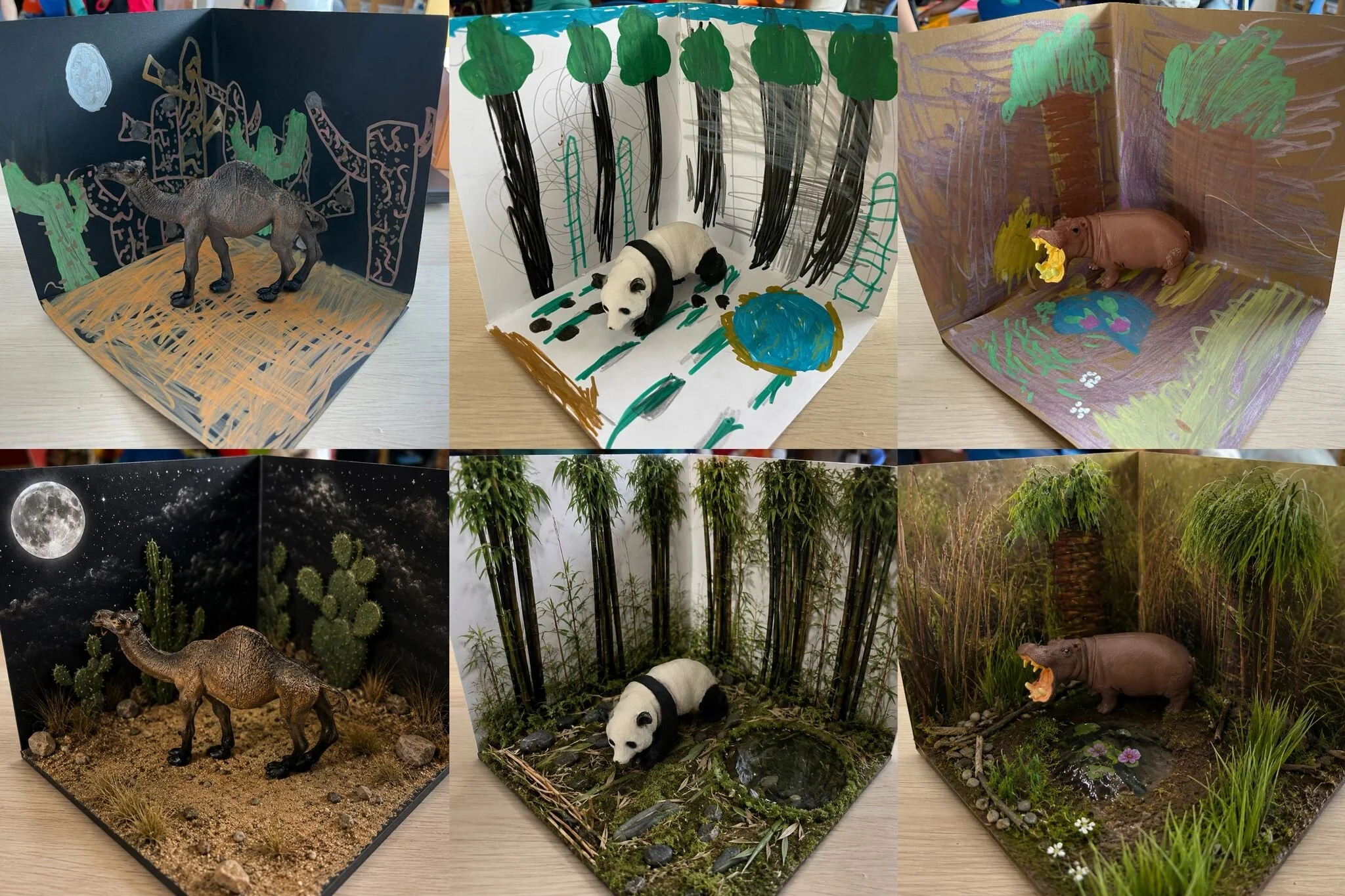
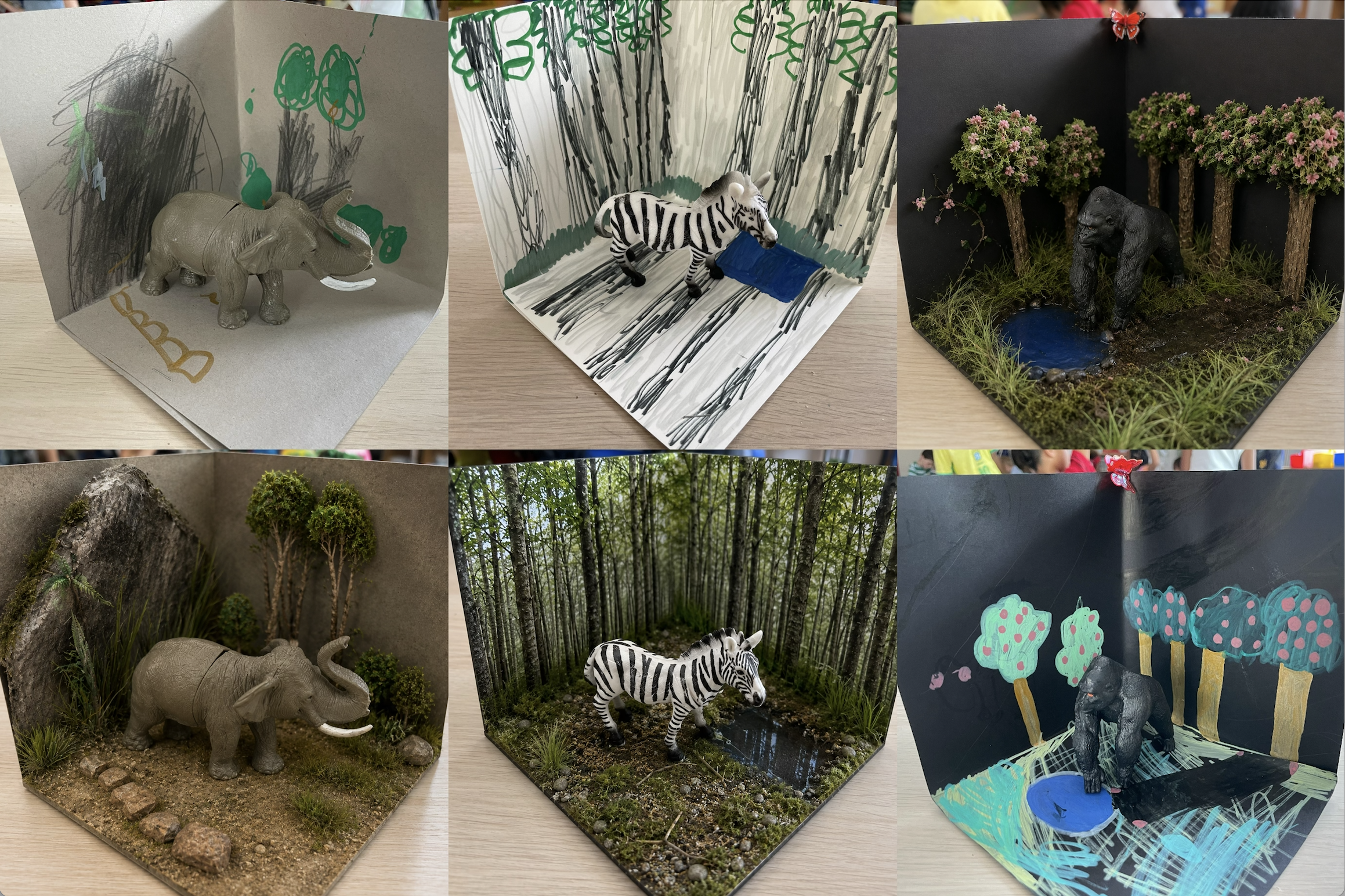
In our Animal Adaptation unit, students designed habitats to help animals camouflage and survive. Through their dioramas, they made their thinking visible—showing what they understood about animal needs, environments, and adaptation.
We then used AI to transform their creations into realistic habitats.
The goal wasn’t to create a better picture. The goal was to make learning visible.
One idea I’ve been exploring through the Pulitzer Center AI & Information Advisory Council is that the way information is represented influences how we understand it. In this project, students expressed their understanding through drawings, and AI helped visualize those ideas in a new format. The result wasn’t just a new image—it was a new opportunity for students to reflect on, explain, and extend their thinking.
What fascinated me most was seeing students recognize their own ideas in a new form. AI became a bridge between imagination and visualization, helping young learners communicate their thinking in ways that sparked curiosity, conversation, and deeper understanding.
Sometimes the most powerful use of AI isn’t generating answers—it’s helping learners see their own thinking more clearly.
Ming Jin